Friday, 28 October 2016

The Invisible President – by Patrick Brigham


Mr. Harold Throdes

Recently listening to an interesting podcast discussion, by Clive Leviev Sawyer and Lance Nelson - concerning the forthcoming Bulgarian presidential election - I chanced upon a newspaper interview in the Daily Sleaze, a Bulgarian underground yellow press weekly. It was with a jobbing actor, who had recently arrived in the capital, called Harold Throdes.

A well known impersonator, Mr. Thodes has recently appeared in the Wrexham Players version of The Invisable Man, and in the past featured in the Hollywood film Ghoastbusters. Originally appearing in a documentary, filmed in Sofia in 1998, called The Invisible Bank Manager, Mr. Throdes – a talented actor – specializes in parts involving people who aren’t there.

The 2016 Bulgarian Presidential election has 21 candidates to date, many of whom have never been heard of before, most of which will never be heard of again, and some of whom are so old, that they have forgotten why anyone is voting for them in the first place. Most candidates qualify for the well known maxim that: ‘Politics is Hollywood for ugly people,’ which is something that makes Harold Throdes an ideal candidate. This is because, you cannot see him at all!

It all came about when the Bulgarian Parliament chose to make it illegal, for its citizens not to vote in presidential elections. It has also become rather confusing for political statisticians, because it befuddles the matter of electoral numbers, if people don’t vote. But, nevertheless, the law was passed.


This then caused more anxiety, when the political pundits had to design a voting slip for the Bulgarian election, because, what if people didn’t want to vote for any of the candidates? So finally, and in desperation, it was agreed to have a special box to tick on the voting form called, “I don’t support anyone.”

‘That’s when I got the phone call,’ Throdes was reported as saying in The Irish Pub, ‘it suddenly dawned on the voting commission, that if the “I don’t support anyone” voters won, there would be no one to take the top job.’

Asked if he was politically motivated in any way, he replied, ‘Nah, most politicians are a bunch of plonkers, aren’t they? They are all the same to me, I only came here for the money!’

Asked what he would do, if he was elected, ‘Well, nothing really; nobody else does, do they? I might open a few supermarkets and petrol stations, and I am quite good at dancing and singing, as long as my bandages don’t drop off. If that happens, everyone usually runs away.’

Asked about the advantage of being invisible, Harold Throdes had to think for a moment. ‘Well, I suppose the best thing is not having to pay for buses, and of course, being able to drink as much beer as I like. I usually find a nice crowded pub, and go around emptying every bodies glasses. Nobody seems to notice!


THE BALKAN NEWS MAGAZINE -CLICK


Saturday, 22 October 2016

Hillary and Donald's ‘Punch & Judy Show by Patrick Brigham


Some comedian recently asked on British TV; apropos the loutish and androgynous Donald Trump – ‘Why would American voters want to replace a perfectly good black president, with an orange one?’

Rather rude, but that is exactly what he looks like. Is it stage make-up which has gone wrong, has he got some sort of malignant skin condition, or does he come – as I strongly suspect - from the planet Zog? These are questions which may enter one's thoughts each day as – we the innocent citizens of Europe – are regaled on the box, and via the news media, by Trumps antics, and his animosity towards his favourite victim, the redoubtable Hillary Clinton.

Mind you, there are those who believe that these two are as bad as each other, as they perform ritual character assassinations on one another, which brings me back to tranquil summer holidays, as a boy, in Rye or was it Margate? Because, through the mists of time, I can still remember summers spent on the south coast of England, and the delight of a traditional English Punch and Judy show, as they knocked the living daylights out of one another.

‘He’s behind you,’ we would all shout, and Mrs. Punch would reply - ‘Oh no he isn’t,’ and we would all shout – ‘Oh yes he is!’
So, do you now recognize who I am talking about?

The unmistakable orange Donald Trump.

I for one have lost so much respect for the Americans, during this absurd US election, which has been reduced to a ridiculous puppet show. Call it a media event if you wish, but the debate has been totally turned on its head, and is now simply light entertainment – at its best - if not a rather bad situation comedy.

The behaviour of these two has shown the USA to be a shallow and trivial place – judging by their supporters and spokespeople - which makes a mockery of their frequent; if now unconvincing announcement, that they are the largest democracy and the world, and the only superpower.

Can you imagine how Putin is rubbing his hands in glee, as he sees the largest *** in the world, daily making a total ass of itself. Could anybody in Europe honestly say that either of these two contenders for the top US job, should be taken seriously? Do you believe the world would be a safer place, with Trump or Clinton's finger on the nuclear button?

I think that the way these two have turned on their old rival Russia, by accusing Putin of practically any misdemeanor imaginable, demonstrates the total incapacity of either of these two stalwarts, to maintain a US position within global politics. If you watch the Russian Television Channel, many there are laughing their socks off at the US, wondering when America will finally implode, and many of us also wonder how Putin has the gall, to send a rather battered and smoky Russian aircraft carrier, up the English Channel?

BUY MY BOOKS ON LINE

Monday, 10 October 2016

Alexis Tsipras, Prime Minister of Greece by Patrick Brigham


Alex Tsipras was born in Athens in 1974. He joined the Communist Youth of Greece in the late 1980s and in the 1990s was politically active in student protests against education reform plans, becoming the movement's spokesperson. He studied civil engineering at the National Technical University of Athens, graduating in 2000, and later undertook post-graduate studies in urban and regional planning. He claims he has worked as a civil engineer in the construction industry, based primarily in Athens.


From 1999 to 2003, Tsipras served as the secretary of Synaspismos Youth, was elected as a member of the Central Committee of Synapismos in 2004, and later he entered the Political Secretariat. In the 2006 local election, he ran as Syriza’s candidate for Mayor of Athens, winning a reasonable 10.5% of the votes cast. In 2008, he was elected as leader of Syriza, succeeding Alekos Alavanos, and was first elected to the Greek Parliament, representing Athens A, in the 2009 election. He was re-elected in May, and in June 2012, he became leader of the opposition, appointing his own shadow cabinet.

In January 2015, Tsipras led Syriza to victory in a snap election, winning 149 out of 300 seats in the Greek Parliament, and formed a coalition with the Independent Greeks. On the 20th August 2015, seven months into his term as Prime Minister, he lost his majority, and after various defections, Tsipras announced his resignation, but called for a snap election to take place the following month. In the election that followed, Tsipras led Syriza to another victory; winning 145 out of 300 seats, and re-formed the coalition with the Independent Greeks. As Prime Minister, he has overseen negotiations regarding the famous debt crisis, initiated the bailout and has largely managed to control the Middle East migrant crisis. In 2015 he was voted by Time Magazine as one of the 100 most influential people in the world. So, who is he?

Tsipras is a political animal, and has always been so. As a university student, he joined the ranks of the renascent left-wing movement, particularly the Enceladus group, and as a member, he was elected to the executive board of the students' union, at the Civil Engineering School he attended. He also served as student representative on the University Senate, and from 1995 to 1997, he was an elected member of the Central Council of the National Students Union of Greece.

I don’t suppose for one moment he has been much of a Civil Engineer, other than in a fall back position, if all his political ambitions fail. But in common with many other politicians from all parties and in all countries, he has started his political career, well heeled and well fed.


According to Katerinna Prifti from the Huffington Post, ‘Some in politics would say Tsipras is a “sprinter,” since he managed to accomplish - in a short period of time - what others have worked for their entire lives. While the economic crisis and the indignation of the Greek people have been an important factor in Tsipras’ rise, and with the success of Syriza, the Greek Parliament’s youngest party leader has distinguished himself on the political scene early on. Even today, his political opponents belligerently bring up his political actions as a “kid.”’

Tsipras is not married. His registered partner is Peristera "Betty" Batziana, an electrical and computer engineer. They met in 1987, at the age of 13, at the Ampelokipoi Branch High School, and both eventually became members of the Communist Youth of Greece. They live together in Athens, with their two sons, their youngest son's middle name being Ernesto; in tribute to Che Geuvara. He is an avid football fan and, having grown up near the stadium, he supports Panathinaikps, attending every home game when possible.

Tsipras is a self-confessed atheist, making him - at the time of his swearing-in -among the three publicly recognized atheist within the heads of government in the EU. When you boil all this down, it makes Alex Tsipras seems almost an enigma, within an enigma, to most, and not – as far as the European Union is concerned – a dream, within a dream.


His relationship with Jean-Claude Junker, for me at least, is the most telling one, certainly judging by their personal chemistry. In an interview with Der Spiegel reporter, Peter Muller, Junker announced quite clearly, that he didn’t understand Tsipras, making their early romance perhaps a little confusing. In his interview, Junker obviously found the rebuttal of his offer of friendship, with the Greek Premier, a little disquieting.

As William Shakespeare once so eloquently said: ‘"Heaven has no rage like love to hatred turned, nor hell a fury like a woman scorned," But jean-Claude Junker was very clear in his reaction -

“There are two types of friendship. The first is rooted in goodwill, of the kind I feel for Mr. Tsipras. The second -- true friendship -- is much rarer, because it must first overcome obstacles and grow. No, my relationship with Mr. Tsipras is, for the time being, a friendship in accordance with the word's first definition. Only later will it become clear if a real friendship will grow out of that. I will, however, acknowledge that the trust I placed in him is not always returned in equal measure.

“One should never take personally the relationships between representatives and institutions. We are here, to work for the people. On the other hand, politics cannot function without reliable personal relationships. With all due respect to the new Greek government, one has to point out that some of its representatives came into office without being adequately prepared for the tasks awaiting them.

“European politics is not a card game where there is a winner and a loser at the end. On the contrary: Either everyone wins, or everyone loses. That is why it is absolutely essential that the Greek government move as quickly as it can.

“Had I said at the beginning of the negotiations that a Grexit was an option, it would have unleashed a wave of speculation on the financial markets. Apparently, there are some in the Greek government who have misunderstood and believe that there is someone in Europe who can pull a rabbit out of the hat in the end. But that is not the case.

“I have warned Mr. Tsipras many times he shouldn't depend on me being able to prevent a failure of the talks if that isn't desired by the other side. We should do everything we can to prevent a Grexit, but to do so, both sides must exert themselves. In the end, I would prefer the rabbit to bear the Greek national colours.

“It bothers me that the Tsipras government acts as though we in the European Commission are austerity fanatics who are crushing the dignity of the Greek people underfoot. I am upset that the Greek government acts as though the Commission is seeking a higher sales tax on electricity, to mention one example. I have told Mr. Tsipras many times that I am open to other suggestions if they result in the same revenues. Instead of complaining about the Commission, Mr. Tsipras could one day tell Greeks that I have offered a €35 billion investment program for the years 2015 to 2020 to stimulate growth in his country. I haven't heard anything about that.”

Well, from friendship to despair, austerity is now up most in the minds of those who live, these days, here in Little Greece; despite Mr. Junkers pronouncements and bluster. Hopefully his persona will change, when he meets across a table with certain Brexiteers, but I rather doubt that, don’t you? I think that revenge is on the table.

ALL MY BOOKS ARE AVAILABLE ON LINE

Saturday, 8 October 2016

Sing A Song of Sixpence- by Patrick Brigham


‘Sing a song of sixpence,
A pocket full of rye.
Four and twenty blackbirds,
Baked in a pie.
When the pie was opened,
The birds began to sing;
Wasn't that a dainty dish,
To set before the king?’

This is the story of a king who would be crowned, not as the Tsar of Bulgaria, but as Prime Minister of a floundering ex-Communist State.


Simeon Borisov Saxe-Coburg-Gotha was born 16 June 1937. During his reign as Simeon II,Tsar of Bulgaria , from 1943 to 1946 he was a minor, and royal authority was exercised over the kingdom on his behalf by a regency. In 1946 the monarchy was abolished - as a consequence of a referendum - and Simeon was forced into exile.


He returned to his home country in 1996 and formed a political party called The The National Movement for Stability and Progress and became prime minister of the Republic of Bulgaria from July 2001 until August 2005. In the next elections, as the leader of NDSV, he took part in a coalition government with the ex-communist party BSP, but in 2008, after NDSV failed to win any seats in the Parliament, he left politics.

He became tsar on 28 August 1943 on the death of his father, who had just returned to Bulgaria from a meeting with Adolf Hitler. Since Tsar Simeon was only six years old, when he ascended the throne, his uncle, Prince Kyril, Prime Minister Bogdan Filov, and Lt. General Nikola Mikov, of the Bulgarian Army were appointed regents

They joined the Axis powers during World War Two, and on 5 September 1944 the Soviet Union declared war on Bulgaria. Three days later the Red Army entered the country without encountering resistance. On the next day, 9 September 1944, Prince Kyril and the other regents were deposed by a Soviet-backed coup and arrested. The three regents, all members of the last three governments, Parliament deputies, heads of the army and eminent journalists were executed by the Communists in February 1945.

In 1990, a few months after the fall of communism, Simeon was issued a new Bulgarian passport. In 1996 - 50 years after the abolition of the monarchy - Simeon returned to Bulgaria and was met in many places by cheering crowds, although at that point, he did not make any political announcements or moves. However, these sentiments gradually dissipated after his premiership, and specifically during his coalition, as a leader of NDSV, with the ex-communist party.

Various estates in Bulgaria that had been nationalized during the Communist era were returned to Simeon and his family, and in 2001 Simeon - who had by this time taken the name Simeon Borisov Saxecoburg Gotha - announced he would return to Bulgaria to form a new political party, called The National Movement Simeon II. Dedicated to "reforms and political integrity."Simeon promised that in 800 days the Bulgarian people would feel tangible positive effects of his government, and would enjoy significantly higher standards of living.

NMSII won a large victory in the parliamentary elections, held on the 17th June 2001, capturing 120 of the 240 seats, and defeating the two main pre-existing political parties. Simeon gave an oath as Prime Minister on 24 July, forming a coalition with the ethnic Turkish party Movement for Rights and Freedoms (MRF). He gave ministerial positions in his government ; mainly to technocrats and Western-educated economic specialists. In 2002, his efforts were recognized by his receiving the 2002 Path to Peace Award from the Path to Peace Foundation. During his time in power, Bulgaria joined the EC and NATO.

In the 2005 elections, Simeon's party ranked second and participated in the grand coalition government led by The Bulgarian Socialist Party, and including the Movement for Rights and Freedoms. Simeon was given the unofficial ceremonial post of Chairman of the Coalition Council. The party got just 3.01% of the votes and no seats at all in the elections of 2009 of 2009, and shortly thereafter, on 6 July 2009, Simeon resigned as NMSII leader.

Mixing with other Royals

British prime minister Harold Wilson once famously remarked, that a week was a long time in politics, and King Simeon in his special way, was out to scotch that theory. But, although he did not use rhetoric, bluster, or offer an unsustainable five year economic program, he did make a promise; that within 800 days of his appointment, the citizens of Bulgaria would be better off. It is hard to say if this came true or not – peoples expectations being as they were at the time - but Simeon had a genuine ‘feel good factor’ about him, a quality which no previous Bulgarian politician had offered to the confused, and often disappointed peoples of Bulgaria.

Bulgarians have a habit of resenting those who seem better off than themselves, and of course – at the time - the hot air was unending, about restituted royal palaces and land. It was as if they believed he had only come to Bulgaria, to get his hands on some dosh, in order to do a runner, at some later date. Silly people make such observations, because the costs of running and restoring buildings of this sort, probably far outweigh their intrinsic value; not to mention the time and effort required to manage such projects. But that didn’t matter to the ‘yellow press,’ whose poison not only infected the reading public, but parliament itself.

I remember Simeon’s first stuttering speeches, where he had to get his tongue around a language he had hardly used for fifty years. But he was nobodies fool, and nor was he taken in by the fawning acolytes, who - in typical Bulgarian fashion - we're relying on sycophancy and flattery, to take his eye off the ball. After all, weren’t most foreigners gullible and easily misled, so why should he be the exception? Surely, it was a well known fact!

This was a time when most of the recent bunch of glib politicians, and ‘First Lieutenant’s of Communism,’ were scouring the country for old enterprises to buy for a $1, and then looking for foreign fools to sell it too for $50 million. Pathetic by todays standards, but then the ‘stupid foreigner’ syndrome, was still in ascendance. So, one might imagine the frustration of Simeon having to deal with these idiots, without loosing his cool, whilst appearing to be running a stable and progressive country. If the average foreign businessman saw Bulgaria as a place for R&R - there were plenty of attractions in the four ale bars of Sofia- although, at that time, there was very little confidence in the economy. Simeon, with his magic touch, and his occasional appearances on foreign TV at Royal weddings, put paid to a lot of investor misgivings, and during his time in politics, the global economy started to take little Bulgaria, just a tad more seriously.

At age 79, Simeon is by now looking back on many things in his life; no doubt far beyond his days in Bulgaria, and particularly his life spent mainly in Spain. But he still is, and ever was a modest man who – over the years - willingly took the time to receive Bulgarian visitors, from the then soviet satellite state of Bulgaria, who - despite their political differences and prejudices - were treated with respect and kindness.


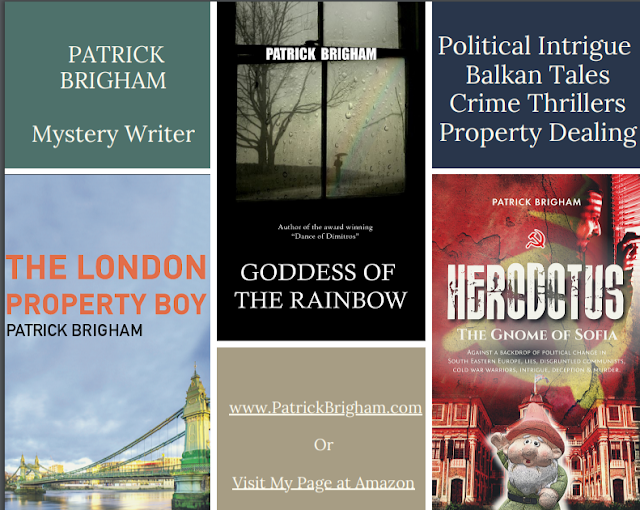
In my book, Herodotus: The Gnome of Sofia, there is a passage at the end of Chapter Five, which - for me anyway - defines that time in Bulgaria. It is when the fictitious King Gregory III is in the Sobranie, chatting to a newly retired President Stenchev, during the inauguration of the newly elected president. It is the story of King Gregory and his place in Bulgaria, but it may also be about Simeon.

“ The first lieutenants of communism often came to see him in various guises, and sometimes just to practice their lying. He knew they were trying to deceive him, to discover some kind of weakness in his character and to understand who and what he knew. But he said nothing. He was polite, he was calm and sometimes even generous, but he always studied them very closely. When they laughed at life’s great ironies, he had held out his hand in friendship, whoever they were and whatever their motives. But Stanchev was different, because he was actually a good man. “

“Outside the heavens opened up, and a great sheet of rain almost drowned the citizens of the capital. Those brave or determined enough to stand outside the Sobranie that morning, simultaneously ran for cover into the cafés and the shops in or around the Narodnie Square. The taxi drivers, who had been waving posters of Gregory, jumped into their cabs and started to sound their car horns. The Hussars in their white plumed uniforms stood patiently in the rain. The police disappeared under the nearest tree, smoked their strong Balkan cigarettes, told each other that nothing would change, and laughed at their misfortune to have been born in such a hopeless place.”

‘When will you tell us who will be the Prime Minister? Who will be in the cabinet?’

“It wasn’t just the local media who were interested, but it seemed the whole world had its attention on Bulgaria, and for the first time ever.
Gregory simply said, ‘When the time is right, I will tell you.’He was not a man to be rushed.”


BUY MY BOOKS ON LINE

Thursday, 29 September 2016

An English Author from The Balkans - by Patrick Brigham


A Ghost From my Sofia Past.

Many people ask me why it is, that I set my stories in Europe and not in England, where I was born? The truth is that I find my nation has become rather set in its ways, and that Europe has so much more variety to offer. Meaning a choice of 30 countries or more, the availability of characters and customs is unending. Living in Greece as I do and part of the Balkans, I am intrigued by the remaining vestiges of Bolshevism, still to be found in ethnically mixed South Eastern Europe.

Living in a metropolis like New York or London, you might wonder what these differences are? After all, you can eat anything you like in these cities – including Peruvian or Nepalese cuisine, with perhaps the odd spot of Mongolian – and even meet the people who cook it. Chatting with the waiter in a foreign country, has always been a recognized way for people to enter a foreign culture – ask any journalist. But, it isn’t quite as easy as that, is it?

As a journalist in the mid 80s, I was busy exploring Eastern Europe, and well before the so called changes, it was a time when Communism was a byword for treachery and subversion. The players – from both the East and the West – eyed one another with considerable suspicion, as well as with considerable ignorance and hate.

The mindset of an old Communist was often hard to understand, unless you had been in their company for any length of time. But the same could have been said of any right-wing dinosaur who, historically, like most western pundits, viewed the rest of the world from their ivory tower. From a comfortable western perspective, there was often considerable cause for contempt – especially for their proclaimed natural enemy’s enforced austerity - whilst the ex- commies hated all forms of consumerism, even though they very often had no choice. Or, did they?

Author Patrick Brigham

When the two cultures collided in the 1990s, and the old Communist countries, allegedly, became democratized, the silly games began. But, the recently disenfranchised Communist Apparatchiks - spy’s and spooks - needed a new master even though they were very good at playing silly games, or even deadly ones. As in Luigi Pirendello’s play “Six Characters in Search of an Author,” these stalwart commie characters went in search of a new master and conveniently found it, thriving in the world of crime.

Having connived with each other for years – brow beating, bribing and bullying –they had little difficulty in bending the rules. By evading tax, enjoying the wonders of offshore banking and making a fortune of their own; twenty five years on, this has now become the reality of our new world, although these days, you can also add Al Quada and ISIL into the mix.

From what I have written so far, you can well see how it is that, with all this jiggery-pokery going on, the fear we all experience in Europe - of Al Quada and terrorism in general - is profound. As most Americans have discovered, in the light of the 9/11 tragedy in the US, all these international criminals fit nicely into the murder mystery genre, for that is what they are!. Baffling the reader, challenging them to understand Islamic extremism, the vacuum left by Communism and the Soviet Union, might be construed as a blight on their private leisure time, but I totally disagree.

We are all sick of the daily news and the media neurosis it causes, because we all know what to expect and generally try to ignore it. Begging the question - ‘How does a TV or newspaper journalist explain, to the general public, with any clarity, how the world works and the pain it inflicts on us all?’

The answer is, with great difficulty!


In my new novel, ‘The Dance of Dimitrios,’ I try to mix some of the horrors of illegal immigration, with everyday things. DCI Mike Lambert, knows about people trafficking and the problems it is causing many governments throughout the world, because Greece is the gateway from the Middle East, for countless migrants, political refugees, and terrorists.

In this novel, DCI Mike Lambert works for Europol, which is the European equivalent of the FBI, who has been sent to Greece, in order to solve a cold case, of a mistaken identity.

It involves the discovery of the body of a woman, found floating in the River Ardas, in Northern Greece. Believed to be of Middle-Eastern origin, her body is buried in a communal grave, along with other Islamic victims of drowning and promptly forgotten.

It is one year on and her fingerprints, which were taken at the time of her autopsy, are run through the Europol computer.When it is revealed that she is actually an Englishwoman living in Greece, the British authorities inform the Foreign and Commonwealth Office who in turn inform Europol. Realizing that it probably means murder, DCI Lambert is dispatched from The Hague.

As it turns out, she is not an ordinary Englishwoman, but a well known writer, causing DCI Lambert to look for motives within the world of literature. As a retired war correspondent and an Arabic scholar, Lamberts attention is also drawn to her previous life and loves, and further suspicion falls on her past life, in the Lebanon, Syria and Jordan.

This is only a taste of the story, because this article is mainly about how the world deals with modern history. Are we as authors bound to ignore reality and follow the path set by Agatha Christie, Colin Dexter and Ruth Rendell or do we get in step with Robert Ludlam, Charles McCarry and Tom Clancy?

I for one, would become quite sleepy if I had to write about bodies found in haystacks no matter how much fun that sounds. Shouting about, getting drunk or divorced is one thing, but is that how true detectives solve cases, or what about improbable endings, which come from nowhere and tiresome last minute admissions. No thanks, not for me!

BUY MY BOOKS ON LINE

Monday, 26 September 2016

Pennies From Heaven? - By Patrick Brigham


Just finished following the Labour Party Conference? Well, as far as I can see, politics is no longer the serious matter that it once was, but it has somehow morphed into a rather sinister form of light entertainment. My theory is that, in a world of virtual reality computer games and high definition special effects, most people have actually lost the plot.

There was a time when the theater and cinema were not only a window on the world, but a true reflection of ourselves, and how we could discover that we were not alone in the world. It was a time when the performing arts represented a social comment, a way of expressing how we felt about our lives, and the conditions in which we were destined to live.

I know some of my readers do not like me to use the expression working class, but in the dark days of the 60s and 70s - when Britain was an industrialized country with serious unemployment lurking on the horizon - coal miners and steelworkers did not need to be reminded that their rented houses, and hard earned wages, were becoming a little less dependable. By their own definition, they were working class, and proud of it - much as they still are today – but in those days, being a manual or unskilled worker, was fast becoming a thing of the past.

But, it was also a time when the theater and cinema - previously inhabited by very posh rather unconvincing actors - was changing. Instead of foppish thespian’s, shuffling across a stage with their trousers around their ankles, saying - ‘I say, Lady Hilda, your husbands back home rather early today, what?’ – the public was suddenly introduced to a new and vital dose, of social reality.

Saturday Night and Sunday Morning

Called – inappropriately in my view - kitchen sink drama, by the puffed up Kenneth Tynons and critics of the day, a whole new set of brilliant working class socialist authors and playwrights emerged from the wings of the dull post war theaters, or into the busy bookstores of the Charring Cross Road. Presenting the British public with - not only good entertainment which they could relate to and perfectly understand – it also served to open the eyes of the more privileged and often bigoted Tories of the day.


Pennies From Heaven - Bob Hoskins and Al Bowlly

As social mobility improved in the 60s, together with all the other new freedoms and excesses, not only was love in the air; alongside the often inviting and noxious whiff of cannabis resin, but so were many unwanted pregnancies. And this was a constant theme, of post war TV and cinema, together with little hope for the future. But as the new writers and musicians attempted to break up the old class differences and to homogenize society - with what were then regarded as new, revealing films, plays and books – many have now become embedded in our culture and into the category of noir.

Dennis Potter with Pennies from Heaven, John Osbourne with Look Back in Anger, Alan Sillitoe with Saturday Night and Sunday Morning, Stan Barstow with A kind of Loving, John Braine with Man At the Top, and finally Nell Dunn with Up the Junction. All these writers were, or still are, self confessed socialists and people who have tried to show us all, not only how the other half lived, but revealing some of the dreadful injustices that existed, at the time of writing, and ever since.

My play Judicial Review, is set at Reading University, and is being performed by an acting group from the Socialist Workers Party. Partly the theater of the absurd and partly about the human condition, it made me think whilst writing it! How about you, what do you think?


It is the year 2000 and Sir Jerald Noakes, a leading City of London business tycoon, has fallen foul of both his own and the prevailing institutional greed. Very much a 21st century phenomenon, it seems that he has been chosen as a scapegoat by the British establishment, and soundly trounced for his misdemeanours. The fact that he is not from an old established UK family might have something to do with it, or that he is the upstart son of an émigré family emanating from somewhere in central Europe. The play begins in court, where it appears Sir Jerald, having been found extremely guilty on all counts, is now awaiting his sentence. The play makes a mockery of money and the way it alters people’s attitudes towards one another; in this case, the piffling sum of £50 million. As the play progresses, the audience is introduced to the fictional actors who all have their own stories to tell, and who are all baffled by the amount of money and greed involved. It also juxtaposes a previous court case – experienced by a member of the fictional cast – which happened during the dark days prior to the 1967 Sexual Offences Act. The play within the play – written by a fictional Irish member of the Socialist Workers Party – is being performed at Reading University. It is one of the few places in the UK that still accepts and enjoys left-wing theatre and, as the play progresses, The Theatre of the Absurd. The director of the play has misgivings about the way it is progressing and both he and the writer – who seems to be permanently full of angst – are at loggerheads over the message the play is sending out to the audience. The director is worried about its political correctness, but the writer is not concerned at all with controversy, because of the emotional baggage he is carrying around, his working class roots, and his life experience. By halfway, it is discovered that Sir Jerald is terminally ill, and – out of compassion – he is released from prison by the Home Secretary. On release, and due to his rapid decline, everywhere he looks he is surrounded by treachery and humbug. No longer a tough nut, with his dictatorship now seemingly over, and in despair, he comes to realise that - during a lifetime in big business - he has only been loved for his money. But however much Sir Jerald’s tormentors believe they have him at their mercy, he still preserves a powerful and humiliating weapon, a final card, which he believes will allow him to die in peace.

BUY MY BOOKS ON LINE

Thursday, 22 September 2016

To Think and Inherit The Wind? By Patrick Brigham


Directed by Stanley Kramer, Inherit the Wind is a fictionalized account of the 1925 US Scopes Monkey Trial which resulted in John T Scopes’ conviction, for teaching Charles Darwin’s Theory of Evolution to a high school science class; contrary to Tennessee State Law.

Spencer Tracy and Frederick March in Inherit the Wind - YouTube

In the film, the characters of Matthew Harrison Brady, Henry Drummond, Bertram Cates and E. K. Hornbeck, correspond to the historical figures of William Jennings Bryan, Clarence Darrow, Scopes, and H L Menchen, respectively. However, the original joint playwrights - Robert E Lee, and Jerome Lawrence - state in a note at the opening of the play, on which the film is based, that it was not meant to be an historical account, and that many events were substantially altered or invented for the Hollywood screen.

Playwright Jerome Lawrence also explained, in a 1996 interview, that the play's main purpose was to criticize McCarthyism, and defend intellectual freedom. According to Lawrence, ‘we used the teaching of evolution as a parable, a metaphor for any kind of mind control. The play is not about science versus religion, it is about the right to think!’

The play was first seen in1955, but the Spenceer Tracy Hollywood movie, had its World Premiere in England, at the Astoria Theatre - in London's West End - on July 7, 1960. With a glittering supporting cast, which also included Frederick March, Gene Kelly, Dick York, Donna Anderson and Harry Morgan, it has now found its way into film noir history, but why? And, why do you think I am also using this great film as my own parable, in order to debunk certain views inherent in Islamic fundamentalism?


In the film, and frustrated by the court's refusal to accept the global scientific and secular view of Darwins theory, Spencer Tracy is forced to turn to the very book which the citizens of this bigoted Tennessee town apparently accept, which they believe actually defines their Christian beliefs, and their received explanation, for the beginnings of mankind on earth. Consequently, Tracy is forced to refer exclusively to The Holy Bible in his presentation, as evidence.

The whole court charade is a version of holding and hitting - in prize fighting terms - and whichever way Tracy approaches the court; in the defence of the school teacher, it is ruled as inadmissible, due to the prevailing Tennessee State Law. Finally, in exasperation, he entices the ever evangelizing and populist state prosecutor, into the witness box, as a witness for the defence.

Because of his profoundly narrow minded puritan views - and the Frederick March prosecutors self professed expertise on the bible - the cross examination, using quotations from Genesis, is hysterical. Occasionally, the prosecutor seems to become a little confused, when certain doubts apparently cross his noble mind, during Spencer Tracy’s questioning. Probing him about who begat who, and why there seemed at times to be three people around when there were only supposed to be two, he has no answer. To the final question, which was: if the earth stopped tuning for a day, how come it didn’t disintegrate? Offering blind faith as his reason, he finally tells Tracy, that it must simply be the will of God.

‘If you had your way,’ Spencer Tracy remarks to Frederick March the prosecutor, ‘we would all be marching backwards, into the 16th Century.’

In the end, the jury finding the plaintive guilty as charged, the judge fines the erring schoolteacher a paltry $100, and the defence immediately announces that it is going straight to the appeals court. But by then, the injustice has been revealed, and even the narrow minded citizens seem to have generally accepted the absurdity of The Book of Genesis, which now languishes in abandonment.

Islamic fundamentalism is a bit like this, and the hapless followers of extreme Islamic cults are expected to believe the exact text of the Koran, and to confirm their adherence to it, by obeying their leaders to the point of death, or at least by causing death. I have no doubt that the newly enlightened population of Tennessee would largely agree with me, if I were to tell them that this level of ignorance and prejudice - to be found in the ranks of ISIS - is the scourge of all mankind, the world, and civilization in general. But, that would depend on them knowing where the Middle East actually was, geography never having been one of America’s strong points. Meanwhile, in common with most foxy politicians, Mr. Trump is playing to the crowds and their fear of homegrown terrorism.

To throw your life away, on the promise of a guaranteed trip to heaven, in the company of twenty or so virgins, does seem to be a little medieval. And Papal Bulls apart, or taking part in a bloody crusade in the name of Christendom, even thirteenth century Northern Europeans were getting a little tired of these antics as a means of salvation. It was far better, and far less expensive, to crawl on ones hands and knees to Santiago De Compostella, or perhaps to live a virtuous and meaningful life, as an acceptable alternative.


In my most recent murder mystery novel, called The Dance of Dimitrios, I explore the absurdities of Islamic Fundamentalism and the people behind it. I succeed in surrounding the subject with intrigue and conspiracy, but in the end it turns out to be about money - not faith, nor religion - but victimization, greed and power. One of these days, if I ever get the opportunity, I will ask an ISIS Mullah a very simple question – ‘Do you actually believe in God?’

BUY MY BOOKS ON LINE


Sunday, 18 September 2016

Greece: Living in the Shadow of Europe – By Patrick Brigham


Until the accession of Bulgaria and Romania into the EU, Greece was on its own. Since the 1920s, it had faced what became the two communist states of Bulgaria, and Albania, and - together with its arch enemy Turkey, peeping over the Evros Delta - the Hellenic Republic not only clearly saw itself as the bastion of Christian western civilization, but extremely vulnerable as well. We all seem to forget that the beginning of modern day Greece did not start when it joined the EU in 1981, but when it became a part of NATO in 22nd October 1951.

Andreas Papandreou

If you get out your 1970 school atlas, you can see how isolated Greece was at the time, surrounded on all sides by some form of potential aggression, that politically, and from a NATO security angle – with the presence of perceived tough communist states on either side – a NATO presence in the Aegean was very important. That was so, not only for the country of Greece itself, but the West generally, Northern Europe in particular, and the embryonic EEC. So, why has this been virtually forgotten?

If you understand the implications of Cold War communist aggression, then you can also see how it was that Greece was shoehorned into the position of spending cash which it did not always have. Driving down the E85 towards Alexandroupolis, you can see row upon row of military camps, and rows and rows of military vehicles, of all kinds, parked for all to see.

Greece supports a large conscripted army, many of which are present in the Turkish border areas, and despite the traditional remarks made by some soldiers – especially those who occupy a small military base in my village - about the horrible food and conditions they are forced to endure, it all costs the government money. Mind you, if soldiers come from the comfort of a typical Greek family home, they would say that, wouldn’t they? So even though much of the aggression of the past is now gone, and South Eastern and Central Europe, is comprised of peace loving nations, in the mind's eye of most Greeks, many threats somehow still remain.

Did it start with the invasion by the Persian King, Darius, perhaps it was Constantine, and the Eastern Roman Empire, or maybe, it was due to Suleiman the Great, and his bloody Ottoman hoards? Well, no - it was a little bit of the latter, and a great deal to do with World War Two!


In my book The Dance of Dimitrios, the body of a woman is found floating in the River Ardas next to an underwater bridge. This bridge actually exists, and was built by the occupying German army. There are a number of these submersed concrete roads, and constantly in use, local Greek farmers can frequently be seen crossing the various local shallow rivers in their tractors and pickups. And, there are plenty of other signs of the old Axis presence in Greece, but that can wait for another day.

Although the Germans army left behind many useful examples of civil engineering, we must remember that during World War Two, they were not guests in Greece; they were not here to enjoy a healthy Mediterranean diet, or to recuperate from twelve months of hard slogging in a factory in Stuttgart. They were in Greece to suppress the Greek Army and the brave Greek freedom fighters, who had recently made a mockery of IL Duce - and his so called Italian invading army - which they had so effortlessly sent packing, back to the mountains of Albania. Unfortunately, with the German army came brutality, inhumanity, and starvation. But that, is also another story!


Post war Greece was a different matter. With American army surplus Jeeps in abundance, plough horses from Alabama, and the wonders of the Marshal Plan, Greek agriculture got going quite quickly after the war. But, then there were all those communists to deal with, here in the northern Greece, many of whom saw Greece’s obvious weakness as an opportunity for expansion, despite the Yalta agreement and Stalin's so called promises. Most disaffected communists were Greek nationals, but many were also Bulgarian, Russian and Albanian. Despite the western side, being backed by the British and Americans, Kim Philby – Britain's most traitorous and preeminent spy - didn’t help much, when he gave away the entire network of MI6 or CIA agents and informers, all of which were tortured and executed by the communists.

After this period, Greece was in political turmoil. The famous military junta, and the Greek Colonels tyrannical takeover of power, was a further time of frightening uncertainty, and many disappearances were recorded during the duration of this fascist regime. Followed in 1981 by a return to democracy, Greece was finally saved, by a newly elected socialist government, headed by Andreas Papandreou, who came to power in that year, and who is now regarded as a national hero.

Knowing the bare bones of Greek postmodern history, is it any wonder that Greece ended up in a mess, and, is it so surprising that in 1981 - when Greece joined the EU - that things were not as they should be? After all, Greece had to be rescued by someone!

I am greatly annoyed by the half educated political blabbermouths in Brussels, who blithely criticize Greece, misquoting history in present day terms, and telling Europe that they should never have been allowed to join the EU in the first place. I am undeniably tired of these ill informed, self seeking, over paid, highly forgettable twerps, whose only wish is to be in front of a TV camera - in order to justify their place in the world – and to find fault. Because, it is not only Greece, which occupies their attention, but Bulgaria and Romania as well.

Bulgaria and Romania have enjoyed the largess of the EU, since the turn of the century, when initial accession talks were beginning to attract EU funding. It is claimed that Greece has had 35 years of EU support, and it is time that the Greeks were held accountable for their financial mismanagement. But ask yourself this question: Greece had been living in the shadow of Europe, and considering the realities of the last 75 years, what were they supposed to do? Give in to communism or join the EU?


BUY MY BOOKS ON LINE

Wednesday, 14 September 2016

Is Greece At The Tipping Point? – By Patrick Brigham


The very north of Greece might well be ‘The Yardstick’ by which we can measure the reality of living in a significantly indebted nation, whilst they enjoy a severe reality check. All this together with a boringly repetitious ticking off from the EU and the Germans, one wonders how one might characterize a country so often referred to in the past as ‘The basket case of Europe?’ But what is the truth?

Most of the verbiage seems to be coming from the memory sticks of mainly semi-recumbent hacks, whose laptops can be seen on the litter strewn desks of their ivory towers, in and about the capitals of the world. These well distanced reporters - who no doubt think Greece to be about Diogenes, Euripides or even Feta Cheese - generally believe that a country can be described in terms of cartoon clichés from the past, and the sound of smashing plates in some obscure Holland Park Greek Restaurant. A country visited more these days – generally for a two week hedonistic piss up in Mykonos – it seems to be turning the corner, according to some Brussels pundits and the Greek leaders themselves. But let us just look at the sequence of events from where I live in Northern Greece.

The pain started over five years ago in Orestiada, the second city of Evros. Evros is the name of the river that separates Greece from Turkey, running south to the Aegean and the north to Bulgaria, where it is called the Maritza. It was where the majority of illegal immigrants arrived – prior to the erection of a fence – but no longer, due to the presence of Frontex police officers. Before then, the Tallibani and many other Asian nationalities, were often seen trudging though the lanes of Evros, looking for help and the occasional handouts.

As you travel south from the Bulgarian border on the E95 towards Orestiada, you can see the city of Edirne on your left hand side across the river, with its many Minarets, Mosques and sprawling City buildings, pink and shining in the sun. It is here that the contrast between the two countries begins, and the story opens up our eyes, away from our media dominated world.

Sunday in Edirne – or Monday in the Islamic World - is lively and alive with activity everywhere. Amongst the many shops there are mountains of affordable, well designed clothes, stores stuffed with all manner of electrical goods and kitchenware, and so many restaurants, it often seems more like a holiday town. It is where you can eat anything you like, provided of course it is a Kebab!

By contrast and across the river, Orestiada it is practically dead, with rows of empty shops and very few people about, despite the fact that Sunday is traditionally a big day for the many Greek Orthodox Churches, for people walking the streets and Greek café life in general. Talk here is about the price of logs – we are coming up to Christmas - and the almost doubling in price of heating oil in recent times. The increase in VAT on food stuffs and the attendant hike in prices - generally unreasonably so – has left many unscrupulous food shops with a nice little earner.

It is now at least 1000 Euro or more to fill the oil tank for winter heating, so most people are practically numb with worry. Stuck to the telly, they are served up a diet of political waffle – there are about six Greek TV stations to choose from – from a bunch of talking heads whose only wish is simply to be on the box. With impossible ideas and multiple choice alternatives, little of it makes much sense under the present circumstances, and, how I wish these self opinionated foolish wind bags would just stop talking! But, aren’t we forgetting something?

The historical philosophy behind the EEC, EC, and finally the EU now seems to have been blotted out by us all recently, now that it is post Brexit, and everything appears to be about money, illegal immigration and dodgy economics. Once it was about war, domination, political intrigue and of course our friends, the Germans. However, like the Bulgarians and to some extent the Romanians, the lure of EU money has always been an imperative – along with being in a rather shaky NATO – and this was surely so with Greece in 1981, when they became the 10th member of the European Community.

Since then, the whole ethos of ‘Poor little Greece’ has changed, and up until recently we have seen a cabal of political elite – mostly devoid of shame – who have sucked the Greek banks dry with a look of total innocence that completely baffles even an old warhorse like me!Asked to define the difference between Bulgarians and Greeks, I was surprised to find more things in common than differences. Finally, it occurred to me that the difference was that Bulgarians wanted to do things, but couldn’t and that Greeks could do things, but didn’t want to!


Maybe it is once more about an old stereotypical bon mot; the one about a Greek who goes into a revolving door last, but managing to come out first! However, this is no longer how Greeks define themselves, because unfortunately the revolving door has become somewhat jammed of late, and it is clear that there isn’t enough WD 40 to go round. So who are the Greeks and how do they see themselves?

Most Greeks would describe themselves as middle class. Even the guys who fix cars have always had a certain swagger about their self image, even more so these days as - for a substantial price - they valiantly keep certain aging vehicles on the road that would otherwise have been scrapped and replaced by a brand new version, care of an easy bank overdraft. But alas, this is no longer so, as Greece is once more a cash economy.

England was once described by Napoleon as a nation of shopkeepers – a bit of French humbug even then and something which equally applied to the French themselves – but that is how I would categorize Greece post 1981, because by then they had unquestionably become a nation of small shopkeepers. Aspiring to adopt the mantle of the affluent middle classes and more like Madam Bovary than Angela Merkel, modern Greeks have somehow managed to survive in the past, though a variety of unsubstantiated bank loans and a penchant for overcharging one another. Subscribing – often with glee – to a form of quasi socialism, they became heavily reliant on this very Greek concept, of the redistribution of wealth. Although, you might say, what is wrong with that?

Café society is where this aberration can be easily explained. With swathes of café’s in all directions, one wonders how many little cups of espresso are required to pay the burgeoning rents required? That is until you get the bill and then there is an outside chance, that you might quickly understand and get the picture!

Greeks work in groups, and in a way there is a little bit of common sense attached to their commercial philosophy – now lost to the crowds of British multinationals littering our English town’s and city high streets – and it is this process that many shop keepers have previously relied on in Greece, for their continued existence. This is how it works - I buy a coffee from you each day, and you buy your spoons from me. I go to a certain dentist or doctor and they come to your restaurant. I use a particular lawyer and they in turn buy their food from your supermarket. Roughly described as brand loyalty, this has been the backbone of Greek business for years; each supporting the next and so on.

The trouble is that since demand has been severely curtailed, even the friendly Greeks have found it increasingly difficult to stem the tide of commercialism and have been forced to look seriously at discount prices in order to attract more business and this has created a total havoc, amongst the easygoing shopkeepers of Orestiada. Secondary commercial streets are now gaunt with the dead faces of empty shops, vendors carry less stock and their tills remain silent; especially for those who do not want to change with the times. Even the simplest request is answered by the edict ‘I will have to order that from Athens,’ or as in the Monty Python’s Cheese shop sketch, ‘we don’t get much call for that around here.’ How did it happen?

Most of the blame quite rightly sits on the shoulders of successive Greek Governments, who have systematically overburdened the public sector with totally unnecessary manpower. With cushy jobs in most Greek Government departments, helping to keep unemployment statistics within acceptable boundaries, and the absurd number of conscripted soldiers in the National Greek Army - keeping young people out of the labour market and off the streets - it has in the past served to help mask the obvious shortcomings of unemployment in the Greek economy. Not to mention the ghastly Balkan word nepotism –rife in Greece prior to 2008 and probably still is - together with vast numbers of unsupported international bank loans by successive Greek Governments, companies and individuals, it is why the Greek house of cards finally collapsed, introducing the whole world to the expression taking a financial haircut! But, is there any hope for the future? Well, the EU has now successfully bullied Greece into the corner, and the word austerity, is on everyone’s lips.

Greeks are often accused of sitting on their own laurels if not their hands – The Iliad, Herodotus, Alexander the Great, and all that – but we must not forget the history of the Greek people in the 20th century, nor their miraculous survival under the Romans, the Byzantines and finally the Ottomans; something that most can remember in the Balkans.

It is clear that they are a hardy lot and although they are not the best team players in the world, they may be the most resilient. So it is here that I see the future changing – more out of necessity than choice – and the metamorphosis of a nation will occur - into a modern Western European Union member - without the word ‘easy’ in its vocabulary and absolutely no WD 40!

BUY MY BOOKS ON LINE - CLICK!

Friday, 9 September 2016

The Grammar Schools Debate – By Patrick Brigham


They have been around for some time

I was amazed this week to hear a NUT pundit qualify the value of grammar schools, in terms of free lunches. Using this statistic, as a yardstick to determine the numbers of underprivileged children attending grammar schools, to me at least, it demonstrated the blasé view that many educators take. Explaining how and why grammar schools are a waste of space, as far as I am concerned, they all seem to be out to lunch!

However distorted their views might seem to be, I can at least remember when going to a grammar school was a great social leveller, and regarded by most, as an unbelievable opportunity for young people to improve their lives, as well as their social mobility. Perhaps my views are a little arcane, in this day and age, but at least, I can write from experience.

Post World War Two expectations for most, were a considerable disappointment, and surviving such a momentous victory – whilst carrying a national debt of some 40 billion GBP – it was a bad time for most. An inglorious prize for the many returning service men and women - with rationing, unemployment and scanty hope for the future - many, quite rightly, put their faith in education. The Atlee Labour government of the day, faced with a country in ruins, tinkered with education; with the introduction of comprehensive schools, but still the choices were very limited, and very much a part of the prevailing class system.

At the time, and tipping all reason on its head, the middle classes and the landed gentry, were not greatly impressed by education, unless it involved knowing which knife and fork to pick up, to behave in a confident gentlemanly manner, and to speak in a certain way, although, importance was placed on character building, self reliance, and leadership qualities as well. The object of the private school system (also known rather confusingly as the Public School system) was that one's offspring mixed with pupils of a similar background, all of whom enjoyed country pursuits, and certain sporting activities.

Well, I went to one of those places, firstly to a prep school – where I was a boarder – and then to a private school, where I was also a boarder. One of the privileged few, you might say, but in post war Britain, many such schools were abysmal - with standards of education that barely matched the criteria of the then Ministry of Education - conditions in which had not changed since the times of Dickens, and were little better than an Approved School, or even an orphanage.

One day, in the 1990s, when I was visiting an orphanage in Bulgaria, the man who took me round told me what to expect. The conditions were apparently below any standard one might expect in the West, that I was to ignore that, and to understand how Bulgaria was underdeveloped, and under resourced. Well, it looked a lot nicer than my two boarding schools, and the food seemed better than the muck they served up at my, so called Public School, although in the 90s, standards had changed everywhere, and post war Britain remained a thing of the past.

At my private school, I was top of the class in practically anything you can think of, and even presented to the school – by the headmaster - as a shining example of the excellence of the private school education system. Quite a triumph, you might think? But, I knew it simply couldn’t be true, and looked around for some evidence to support my somewhat jaundiced view. Were the other pupils thick in the head, were the school masters third rate, or was the school syllabus determined by some obscure university somewhere in the wilds of Yorkshire or Wales? Or, was I there, because it was cheap?

More importantly, why were my accolades so uncomfortable to bare, or was it partly to do, with all of these things, put together? I wrote to my old mum and said that I wanted to leave – in any case I was having problems with a rather frustrated under matron, and consequently the headmaster – and by then, as head boy, I thought it was time to go, before I went on to take my A Levels. And so I left this wonderful character building institution, and returned once more to the real world.

A family friend – who was on the local education committee – got me a place at the local grammar school, and after the usual Palava of buying a new blazer and tie – all the other baggy grey flannel sartorial accoutrements were largely intact from before - and finally the great day arrived when, as a day boy, I took the bus and train to school, much as the rest of the normal world was expected to do.

Wow! Can you imagine going from school genius, to the school dunce, in one week? Being right about my ex private school, was no consolation to me, because I suddenly found myself in a different world – of clever, well motivated and clear minded students – plus a number of very bright, well intentioned, and talented school teachers; all of whom viewed me with scorn, and who resented my presence there in their precious grammar school, almost as much as I regretted having gone there!

At first I couldn't quite see why I was so despised. I dealt with the usual school playground baiting and bullying attempts, and the usual isolation in my stride, and short of the odd punch up, I held my own and tried to fade into the background. But then It occurred to me. It wasn’t so much that I was seen as a privileged, toffee nosed ex public schoolboy, but it was that I had taken a school place away from someone far more deserving; far less privileged - perhaps the son of a hard working and more deserving family - whose offspring needed a leg up in the world, and a guaranteed trip to a university.

It was clearly a case of inverted snobbery and was, undoubtedly, politically motivated from top down and bottom up. But, whatever my reasons for being there – none of which were of any interest, to the school principals – I quickly did them all a big favour, and removed myself to an adult collage, together with a number of fellow numpty’s, who had experienced much the same problems as me elsewhere. Since when, the world of grammar school education, has rolled on unmentioned ever since, until today. So, what am I saying?

Wilshaw attacks grammar schools

There is no question that grammar schools are the only way into higher education for many. It is untrue – now the Labour Party has changed its tune – that grammar schools attract the wealthy middle classes, when they are perfectly able to afford private education for their children, and would choose to do so for the usual well known snobby reasons. In any case, they would have to go and live somewhere less salubrious, in order to qualify for a grammar school place, because new grammar schools are likely to be built in poorer areas.

There is no doubt that government schools are generally manned by people with a socialist background, and are unlikely to accept people who drive around in limousines – hence their reluctance to accommodate yours truly, although I did have a rusty bicycle- and would be more likely to want to help a family struggling to survive on a typical salary.

Judging from conversations with teachers in the public sector, they would prefer excellence, to the dumbing down process - where everyone passes, and standards are consequently low - because they also judge their success by which university their students finally end up in. Oxbridge is a feather in everyone’s cap, and they too strive for excellence.

Finally, private education has generally improved, now the world needs MBA’s and business degrees. So, for a well rounded education at a price, the majority of private schools provide an acceptable level of education, with a likely future university entrance. With elite schools, like Eton or Harrow, the chances are that Oxbridge is achievable, but this is also so of a top grammar school graduate. And let's not knock the red brick universities, or colleges of further education, teacher training and even apprentice colleges; they all have a place in our world, and there are even avid Brexiteers, who occasionally need a plumber, even if they are Polish!

ALL MY BOOKS ARE AVAILABLE ON LINE - CLICK!


Something for A Quiet Time- by Patrick Brigham

Amazon UK -  https://www.amazon.co.uk/-/e/B00BGZTKFE Amazon US -  https://www.amazon.com/-/e/B00BGZTKFE Enable Ginger Cannot connect to Ging...